A website is often the first real interaction a customer has with a business, and it usually happens before a phone call or a store visit. That makes the difference between a site that simply exists and one that actually works for the business worth understanding, especially before hiring someone to build it.
A professional website development company can help with planning, UI/UX design, frontend and backend development, content integration, SEO foundations, testing, deployment, security, performance, and ongoing maintenance. The exact scope depends on the type of website and the business requirements.
This guide covers what website development actually involves, what a website development company does at each stage of a project, what typically affects cost, and what to check before choosing a development partner.
Quick Answers
What does a website development company do?
A website development company plans, designs, develops, tests, launches, and maintains websites based on a business’s goals, content, functionality, users, and technical requirements.
How long does it take to build a business website?
A straightforward business website can take a few weeks, while websites with e-commerce, custom functionality, integrations, or large amounts of content can take several months depending on scope and project requirements.
How much does website development cost?
The cost of website development depends on factors such as the number of pages, design complexity, functionality, content requirements, CMS or custom development approach, integrations, and project timeline.
What is the difference between website design and website development?
Website design focuses primarily on visual appearance, user experience, layouts, and user flows, while website development focuses on building the functionality, code, content systems, integrations, performance, and technical infrastructure that make the website work.
When should a business hire a professional website development company?
A business should consider professional website development when it needs a website with custom branding, stronger SEO and performance control, e-commerce or booking functionality, integrations, customer portals, or room to scale beyond a basic website builder.
What Is Website Development?
Website development is the process of building, coding, testing, deploying, and maintaining a website so it works correctly across devices and browsers, handles forms and data properly, and remains secure and maintainable over time.
It is related to but different from web design. Design covers how a site looks and how a visitor moves through it. Development covers how the site actually functions: the code that renders the pages, the systems that store and retrieve content, and the integrations that connect forms, payments, logins, or other services to the rest of the business.
A full-service website development company may handle both design and development because these areas are closely connected. A visually attractive website that loads slowly, provides a poor mobile experience, or breaks when users submit a form can still fail to achieve the business’s goals.
What Does a Website Development Company Actually Do?
A professional website development company generally takes a website project through six main stages. The exact process can vary depending on the project’s size, technology, and business requirements.
-
Discovery and planning.
The team maps out the site’s goals, target audience, required pages, functionality, content requirements, and sitemap before design and development begin. -
UI/UX design.
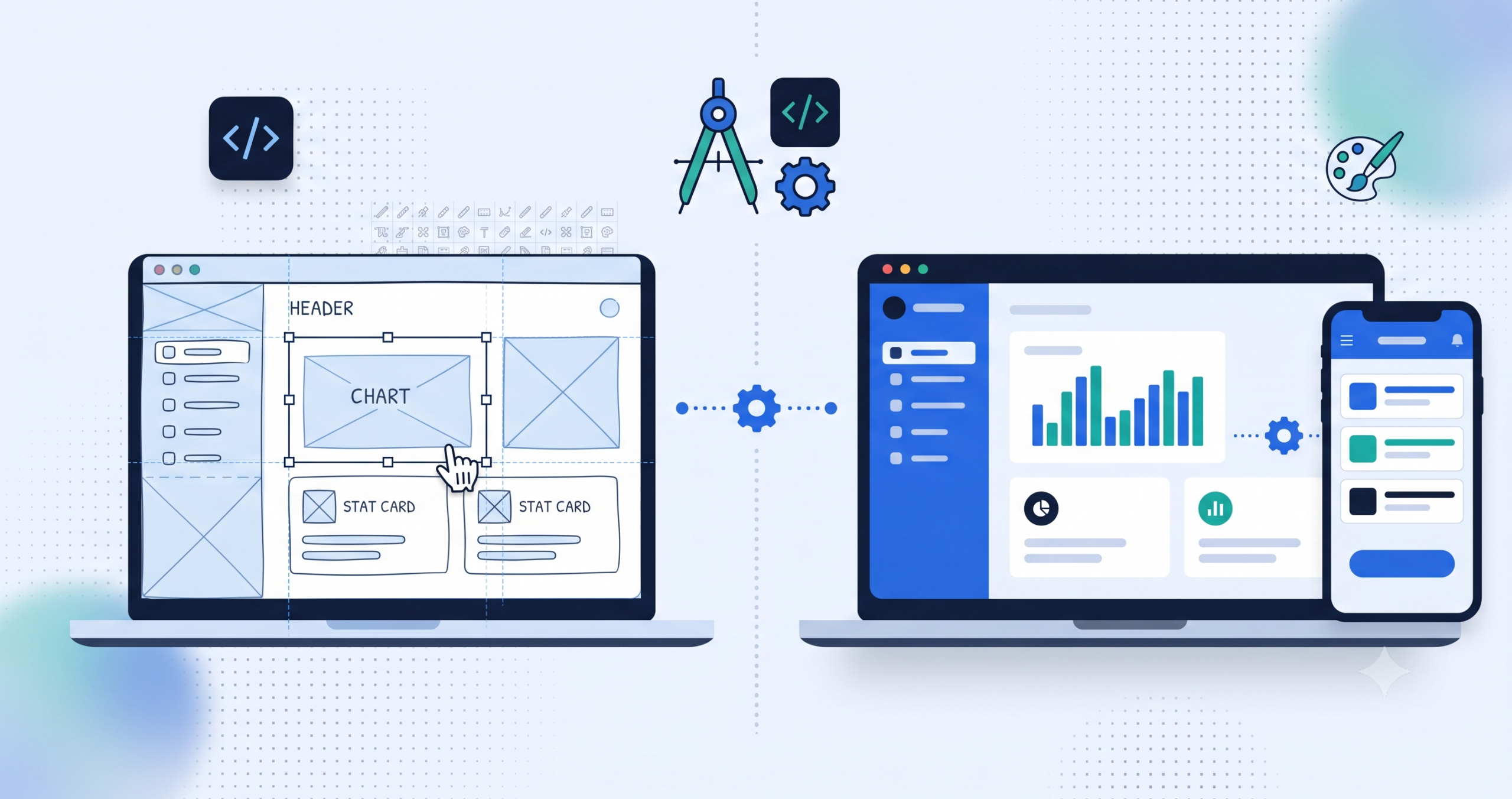
Wireframes and visual designs are created, usually with mobile and desktop experiences in mind, so the layout and user flow can be reviewed before development begins. -
Development.
The frontend, backend, CMS, database connections, forms, and other required functionality are built according to the approved design and project scope. -
Content integration and SEO foundations.
Page content, headings, metadata, image optimization, internal linking, technical structure, and other basic on-page SEO elements are prepared so search visibility is considered from the beginning rather than treated as an afterthought. -
Testing and quality assurance.
The website is checked across relevant browsers and devices, along with forms, navigation, links, responsiveness, performance, and other important functionality. -
Launch and ongoing support.
The completed website is deployed to hosting infrastructure, followed by monitoring, updates, backups, security maintenance, bug fixes, and future improvements as required.
Skipping or rushing the planning stage can create problems later in the project. Unclear requirements, missing content, and late design changes can result in rework, delays, and additional development costs.
Types of Business Websites
Website development covers several types of business websites. The right approach depends on what the website needs to accomplish and how visitors will use it.
- Brochure or marketing websites, focused on presenting the business, services, products, and contact information
- E-commerce websites, built around product listings, shopping carts, checkout flows, payments, orders, and customer accounts
- Web applications or customer portals, where visitors log in to access accounts, bookings, dashboards, or other personalized functionality, which can extend into custom software development rather than a standard website build
- CMS-based websites, built on platforms such as WordPress to make content management easier for the business
- Fully custom-coded websites, which can provide greater control over functionality, architecture, integrations, and performance depending on the project’s requirements
Website Development vs Website Builders
DIY website builders are a reasonable starting point for some businesses, particularly when the requirements are simple and the business wants to manage the site independently. The trade-offs become clearer as a business requires more customization, functionality, integrations, or control.
| Factor | Professional Website Development | DIY Website Builder |
|---|---|---|
| Design flexibility | Can be customized around the brand and project requirements | Usually limited by available templates and builder features |
| Performance and SEO control | Greater control over code, site structure, performance, and technical implementation | Control depends on the builder’s platform and available settings |
| Scalability | Can be planned around future features and business growth | Limited by the platform’s features, plans, and technical constraints |
| Ownership | Business ownership depends on the development and hosting agreement; confirm the terms in the contract | Website is generally tied to the builder’s platform |
| Cost structure | Project-based development followed by hosting and maintenance costs | Usually a recurring builder subscription |
| Best fit | Businesses needing custom functionality, branding, integrations, SEO control, or long-term scalability | Simple websites and businesses that can work within the builder’s available features |
Neither approach is automatically right for every business. A website builder can be practical for a simple online presence, while professional development becomes more useful when the business needs greater control over design, functionality, integrations, performance, ownership, or future expansion.
Why Businesses Hire a Professional Website Development Company
Businesses typically hire professional website developers when they need more than a basic collection of pages. Common reasons include:
- Brand-accurate design, built around the business rather than relying entirely on a generic template
- A strong SEO foundation, including logical page structure, mobile usability, performance considerations, metadata, and crawlable content
- Room to scale, so booking systems, e-commerce, customer portals, APIs, or other functionality can be added as the business grows
- Security practices, including HTTPS/SSL, secure form handling, authentication where required, software updates, and appropriate access controls
- Accessibility considerations, so the site is more usable for visitors relying on keyboards, screen readers, or other assistive technologies
Page speed and usability are important technical considerations for modern websites. Google’s Core Web Vitals provide metrics related to loading performance, interactivity, and visual stability. The Web Content Accessibility Guidelines (WCAG) provide an internationally recognized reference for making web content more accessible.
What Affects the Cost of Website Development?
Website development cost varies significantly between projects. A reliable estimate should be based on the actual requirements rather than a generic price presented before the project scope is understood.
The main factors that can influence website development cost include:
- Number of pages and site structure, since a simple five-page website requires less work than a large website with multiple templates and content types
- Custom design versus template-based design, because fully custom layouts generally require additional design and development work
- E-commerce or booking functionality, which introduces additional functionality, workflows, testing, and potentially payment integrations
- CMS-based versus fully custom-coded builds, which can affect development time, flexibility, maintenance, and long-term management
- Third-party integrations, such as payment gateways, CRMs, booking platforms, analytics systems, or other external services
- Content volume, including copywriting, photography, image preparation, content migration, and product or service data
- SEO requirements, especially when the project requires extensive information architecture, redirects, structured content, technical optimization, or migration work
- Timeline, since compressed launch schedules can require additional resources and coordination
- Post-launch support and maintenance, including updates, backups, security monitoring, fixes, and future changes
A reliable development partner should walk through these factors during discovery and provide a scope-based estimate that explains what is included rather than presenting an unexplained flat price.
How to Choose a Website Development Company in Chennai
Choosing a website development company is about more than comparing the lowest quote. The right partner should be able to demonstrate relevant technical capability, a clear process, and an understanding of the business goals behind the website.
A few criteria are worth checking before signing off on a website project:
- Relevant portfolio. Look for previous projects with similar business goals, industries, functionality, or technical requirements.
- Direct access to the development team. Clear communication with the people actually building the website can reduce misunderstandings and make technical decisions easier to discuss.
- An SEO-ready foundation from day one. Ask whether page structure, performance, mobile usability, metadata, internal linking, and other technical SEO fundamentals are considered during development.
- Clear ownership terms. Confirm who owns the website code, content, design assets, domain, hosting account, and other project assets after completion.
- A defined post-launch support plan. Ask how updates, backups, security fixes, technical issues, and future improvements will be handled after the website goes live.
- Transparent milestones and deliverables. A clear process covering discovery, design, development, testing, and launch makes it easier to track progress and manage expectations.
Cospixare Technologies, a Chennai-based website development company, runs projects through a structured process that includes discovery, Figma-based UI/UX design, development using modern front-end frameworks alongside CMS platforms depending on the project, and deployment on cloud hosting infrastructure. Website ownership and project handover terms are defined as part of the engagement. For businesses that plan to expand a website into a customer portal, booking platform, or other custom system later, the team also works on custom software development, allowing the digital platform to evolve as requirements grow.
Common Mistakes Businesses Make with Website Projects
A few recurring mistakes can cause website projects to become more expensive, delayed, or less effective than expected:
- Prioritizing visual design over performance and SEO structure, which can create a website that looks good but performs poorly for users or search engines
- Skipping mobile-first testing, even though a significant portion of website traffic comes from mobile devices
- Not clarifying who owns the code, content, domain, and hosting account before the project starts
- Treating launch as the finish line, then leaving the website without updates, backups, security maintenance, or content improvements
- Ignoring accessibility, which can make the website harder to use for people with disabilities and may create compliance concerns depending on the organization and jurisdiction
- Adding SEO only after development is complete, which can result in avoidable changes to page structure, URLs, content, and technical implementation
Final Thoughts: Building a Website That Actually Works for the Business
A website development company does more than make a website look good. Discovery, planning, UI/UX design, development, content integration, SEO foundations, testing, deployment, and post-launch support all influence whether the finished website actually helps the business achieve its goals.
The right development approach depends on the business. A simple website builder can be sufficient for a basic online presence, while professional website development can provide greater control when a business needs custom branding, advanced functionality, integrations, stronger technical SEO foundations, or room to scale.
For businesses in Chennai evaluating website development partners, the most important questions are not only about price. Look at the development process, relevant experience, ownership terms, technical practices, SEO approach, communication model, and post-launch support before making a decision.
For more common questions about working with a development partner, see Cospixare’s FAQ and knowledge base. Ready to scope a new website? Speak with Cospixare Technologies to discuss your requirements, or explore the full range of Cospixare services.
Frequently Asked Questions
How long does it take to build a business website?
A straightforward brochure site can take a few weeks, while a site with e-commerce, custom functionality, integrations, or a large amount of content can take a couple of months or more. Timelines depend heavily on project scope and how quickly content, approvals, and feedback are provided.
What’s the difference between a website builder and professional website development?
A website builder uses pre-set templates and platform features for relatively quick setup. Professional website development can produce a site built specifically around the business, with greater control over design, functionality, integrations, performance, and future development.
Will my website be mobile-friendly and fast?
A professionally developed website should be designed and tested for mobile responsiveness and performance from the beginning. Actual speed depends on factors including hosting, code, images, third-party scripts, content, and how the site is implemented.
How much does website development cost?
Cost depends on the number of pages, design complexity, functionality such as e-commerce or bookings, content requirements, integrations, CMS or custom development approach, and ongoing support. A development company should provide a scope-based estimate after understanding the requirements rather than relying only on a flat rate.
Do I need e-commerce functionality on my website?
Only if the business plans to sell products or services directly through the website. Many businesses can start with a marketing website and later add e-commerce, booking, payments, or customer-account functionality when those capabilities become necessary.
Do I own my website’s code and content after launch?
This depends on the agreement with the development company. Before starting the project, confirm in writing who owns the source code, content, design assets, domain, hosting account, and other project materials after completion or final payment.
What is the difference between website design and website development?
Website design focuses on visual appearance, layouts, user experience, and user flows. Website development focuses on implementing those designs through frontend and backend code, content systems, databases, integrations, functionality, performance, and technical infrastructure.
Related Cospixare Services
- Website Development
- UX/UI Design
- Cloud Solutions and DevOps
- Digital Marketing and SEO
- Custom Software Development
- All Cospixare Services
- FAQ and Knowledge Base
- Contact / Get a Project Estimate
Further Reading