What Is Custom Software Development? A Complete Guide for Businesses
Off-the-shelf software works well until it does not. Most businesses start with ready-made tools for accounting, scheduling, or customer management, then reach a point where the software forces a workaround instead of supporting the way the business actually operates. That gap is usually the moment custom software development enters the conversation.
This guide explains what custom software development means, how the process works from planning to launch, what typically drives the cost, and what to look for in a custom software development company before signing a contract. The same fundamentals apply whether the end goal is a customer-facing mobile app, an internal management system, or an industry-specific platform for a sector like education or healthcare.
Quick Answers
What is custom software development?
Custom software development is the process of designing and building software specifically around a business’s workflows, requirements, data, integrations, and users.
How long does custom software development take?
Custom software development can take anywhere from several weeks for focused internal tools to several months for complex multi-platform systems, depending on scope, integrations, complexity, and testing requirements.
How much does custom software development cost?
The cost of custom software development depends primarily on the project’s scope, platforms, integrations, complexity, design requirements, development effort, and ongoing support needs.
When should a business choose custom software?
A business should consider custom software when existing solutions cannot efficiently support its workflows, integrations, scalability requirements, security needs, or desired customer experience.
What Is Custom Software Development?
Custom software development is the process of designing, building, testing, and maintaining software created specifically for one organization’s requirements, rather than software sold to many companies as a fixed product.
A subscription tool like generic accounting or CRM software is built to serve thousands of businesses with broadly similar workflows. Custom software is built around one organization’s actual processes, data structures, and integrations. The business defines the requirements, and the development team builds the system to match, instead of asking the business to adapt to whatever features a vendor decided to include.
Custom software can take several forms, including:
- A web application used internally or by customers
- A mobile app for iOS and Android
- A backend system or API that connects other tools together
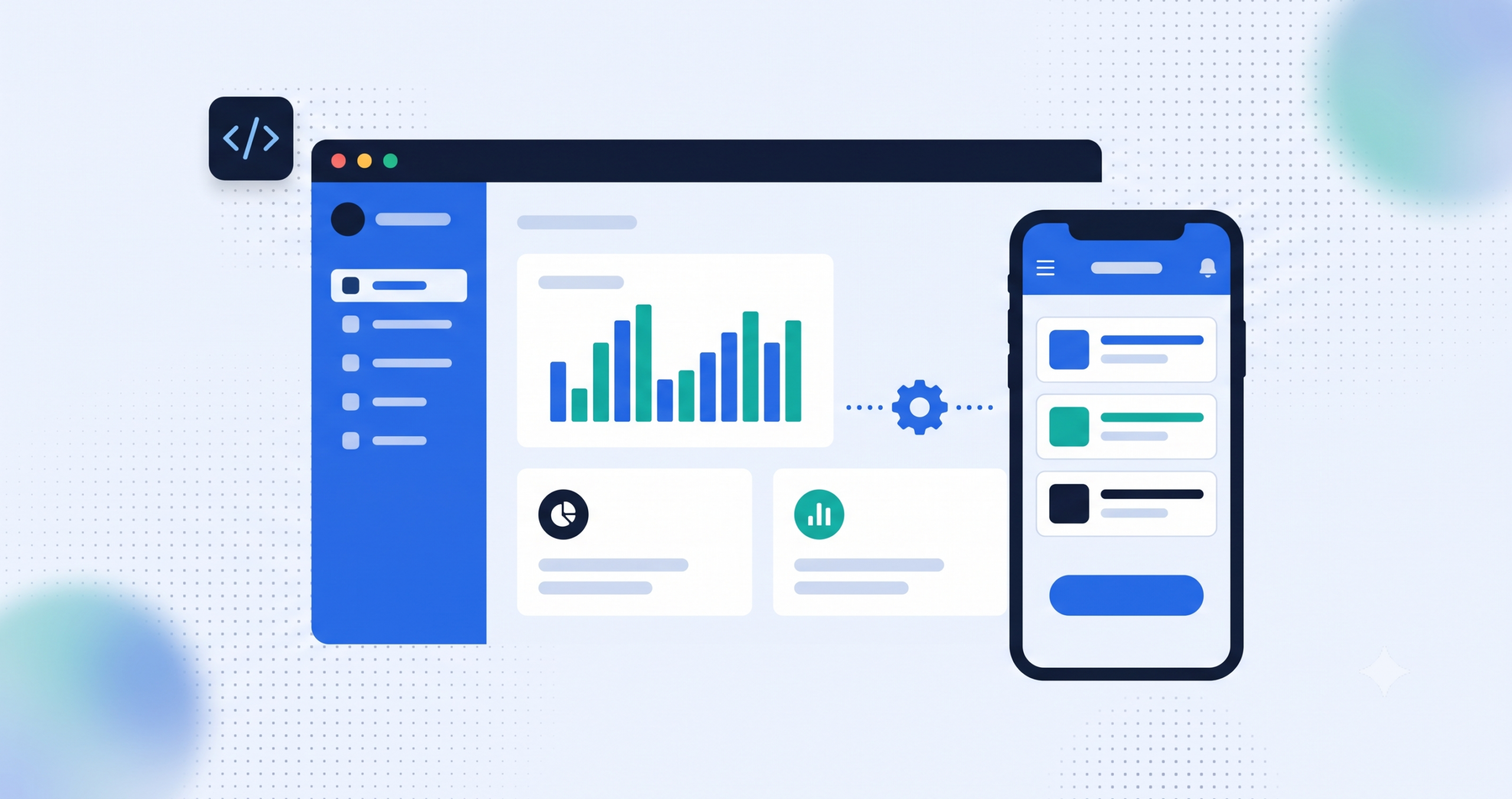
- A full platform combining a website, mobile app, and admin dashboard
How Custom Software Development Works
A structured custom software project generally moves through five stages, regardless of which company builds it.
- Discovery and requirements gathering. The development team documents what the software needs to do, who will use it, and how it fits into existing workflows and systems.
- UI/UX design. Screens and user flows are designed, often as a clickable prototype, so stakeholders can review the interface before development begins.
- Development. Engineers build the frontend, backend, and database according to the agreed scope, usually in short cycles with regular check-ins rather than one long build phase.
- Testing and quality assurance. The software is tested across devices, browsers, and usage scenarios to catch bugs, security gaps, and performance issues before launch.
- Deployment and ongoing support. The finished software is deployed to production (app stores, or cloud servers, or both), followed by monitoring, bug fixes, and future feature updates.
Skipping or rushing the first stage is one of the most common reasons custom software projects run over budget, since unclear requirements tend to surface as expensive changes later in development.
Custom Software vs Off-the-Shelf Software
Both approaches are valid. The right choice depends on how closely a business’s needs match what pre-built software already offers.
| Factor | Custom Software | Off-the-Shelf Software |
|---|---|---|
| Fit to business process | Built around existing workflows | Business adapts to the software’s workflow |
| Upfront cost | Higher, since it is built from scratch | Lower, usually a subscription fee |
| Time to first use | Weeks to months, depending on scope | Immediate or near-immediate |
| Ownership | Business typically owns the code (confirm in contract) | Vendor owns the product; business licenses access |
| Scalability | Built to scale with the specific business | Limited by the vendor’s roadmap and pricing tiers |
| Integrations | Built to connect with existing systems | Limited to the vendor’s supported integrations |
| Long-term cost | Development plus maintenance | Recurring subscription, often per user |
Off-the-shelf tools are usually the right call for standard functions like email, basic accounting, or general project management. Custom software tends to make more sense when a business has a workflow, data requirement, or customer experience that generic software cannot support well.
Types of Custom Software Businesses Build
Custom software development covers a wide range of project types, and most businesses end up needing more than one of the following working together.
- Customer-facing web and mobile apps, for e-commerce, service booking, or account management
- Internal business tools, such as inventory systems, HR portals, or operations dashboards
- Backend APIs and integrations that connect a website, mobile app, and third-party services
- Industry-specific platforms, built around the rules and workflows of a particular sector
Education is a good example of an industry where generic tools rarely cover the full need. Schools and colleges often require admission and fee management portals, attendance and exam tracking systems, parent communication apps, and learning management platforms that reflect their specific curriculum, calendar, and reporting requirements. A generic CRM or spreadsheet-based process can only stretch so far before it becomes a bottleneck for administrators, teachers, and parents alike. The same logic applies across healthcare, logistics, retail, and financial services: each has enough operational detail that custom software often outperforms a one-size-fits-all product.
Why Businesses Invest in Custom Software Development
The decision to build rather than buy usually comes down to a handful of practical reasons:
- Exact fit to the workflow. The software matches how the team actually works, instead of forcing new habits around someone else’s product decisions.
- Full ownership. With the right contract terms, the business owns the source code and is not dependent on a vendor’s pricing changes or product roadmap.
- Data control and security. Custom systems can be built around specific compliance, encryption, and access-control requirements rather than relying on a vendor’s shared infrastructure.
- Scalability on the business’s terms. The software can grow with new features, more users, or new markets without hitting a vendor’s plan limits.
- Integration with existing systems. Custom software can be built to connect directly with the tools a business already depends on.
Independent standards such as the ISO/IEC 25010 software quality model define quality attributes like reliability, performance efficiency, and maintainability in detail. These can be a useful shared reference when comparing proposals from different development vendors.
What Affects the Cost of Custom Software Development
Custom software pricing varies significantly from project to project, so any company quoting a fixed number without first understanding the requirements should be treated with caution. The main factors that influence cost include:
- Scope and feature complexity, since a simple internal tool costs far less to build than a multi-platform system with real-time data and complex logic
- Number of platforms, as building for web, iOS, and Android together costs more than a single platform
- Backend complexity, including how much data the system handles and how many systems it needs to connect with
- Design requirements, since a fully custom interface takes more time than working from an existing design system
- Integrations with third-party services, such as payment gateways or existing school and business management systems
- Timeline, since compressed deadlines usually increase cost
- Post-launch support and maintenance, which is an ongoing cost separate from initial development
A reliable development partner should walk through these factors during discovery and provide a scope-based estimate rather than a generic price list.
How to Choose a Custom Software Development Company in Chennai
Chennai has a growing base of software development companies, which makes the selection process as important as the technical work itself. A few criteria are worth checking before committing to a partner:
- Direct access to engineers. Projects tend to move faster and stay more accurate when the business communicates directly with the developers building the software, rather than through layers of account managers.
- Clear code ownership terms. Confirm in writing that full source code and intellectual property transfer to the business after project completion or final payment.
- Security practices. Ask how the company handles data encryption, authentication, and secure coding practices, such as the OWASP Top 10 guidelines.
- A transparent process with milestones. A structured process covering discovery, design, development, testing, and deployment, with visible progress at each stage, reduces the risk of scope creep and missed expectations.
- Post-launch support. Software needs updates, bug fixes, and occasional scaling work after launch, so ask what support looks like once the project goes live.
- Relevant technical experience. Review the technologies the team works with (such as Flutter, Node.js, Python, or cloud platforms like AWS and GCP) and confirm they match the project’s requirements. Frameworks such as the AWS Well-Architected Framework outline what a well-built cloud setup should look like, which is a useful reference when reviewing a vendor’s cloud practices.
Cospixare Technologies, a Chennai-based custom software development company, structures projects around this kind of direct-engineer model: clients work with the development team through discovery, Figma-based UI/UX design, build, and testing, with full code ownership transferred at the end of the engagement. The team works primarily with Flutter for cross-platform mobile apps, and Python or Node.js for backend systems, deployed on AWS or GCP infrastructure. The team’s own product, LinkBasket, a shared grocery and budgeting app, reflects the same real-time sync and data security practices applied to client projects. Once software is live, some businesses also work with the same team on digital marketing and SEO to help the new platform reach and retain users.
Common Mistakes to Avoid When Building Custom Software
A few recurring mistakes tend to cause the most delays and budget overruns in custom software projects:
- Starting development before requirements are locked down, which leads to rework as features change mid-build
- Choosing a vendor based on price alone, without checking code ownership terms or post-launch support
- Skipping a design phase, which often results in a functional but confusing user experience
- Underestimating testing time, especially for software handling payments, sensitive data, or multiple user roles
- Not planning for maintenance, since software requires updates well after the initial launch
Final Thoughts: Choosing the Right Path Forward
Custom software development is not the right choice for every business need, but it is often the right choice when a business’s workflow, data, or customer experience does not fit neatly into an existing product. Understanding how the process works, what drives cost, and what to check before hiring a custom software development company puts a business in a far better position to make that decision with confidence.
For businesses in Chennai weighing their options, whether the project is a customer app, an internal system, or a platform built for a specific industry like education, the fundamentals stay the same: clear requirements, a transparent process, and a development partner who is upfront about scope, cost, and ownership. For more common questions about working with a development partner, see Cospixare’s FAQ and knowledge base.
Need help figuring out whether custom software is the right fit for your business? Speak with Cospixare Technologies to walk through your requirements and get a scope-based project estimate, or explore the full range of Cospixare services.
Frequently Asked Questions
What is the difference between custom software and off-the-shelf software?
Custom software is built specifically for one organization’s requirements, while off-the-shelf software is a pre-built product designed to serve many businesses with similar needs. Custom software costs more upfront but fits the business’s exact workflow; off-the-shelf software is faster to start with but requires the business to adapt to its existing features.
How long does custom software development take?
Timelines depend on scope. A focused internal tool might take a few weeks, while a multi-platform system with complex backend logic can take several months. A development company should be able to provide a realistic timeline after the discovery phase, once requirements are clear.
How much does custom software development cost?
Cost depends on factors like platform count, feature complexity, integrations, and design requirements, so it varies significantly between projects. A trustworthy development partner provides a scope-based estimate after understanding the requirements rather than a fixed number upfront.
Can custom software be built for schools, colleges, or training institutes?
Yes. Educational institutions often need admission and fee management systems, attendance and exam tracking, parent communication apps, and learning management platforms tailored to their specific curriculum and administrative processes, needs that generic software frequently cannot support well. These typically fall under standard custom software development services.
Do I own the source code once the project is complete?
This depends on the contract with the development company. Businesses should confirm in writing that full source code and intellectual property rights transfer to them after project completion or final payment, rather than assuming ownership by default.
What technologies are commonly used in custom software development?
Common choices include Flutter for cross-platform mobile apps, Python or Node.js for backend systems, React for web frontends, and cloud platforms like AWS or GCP for hosting and infrastructure. The right stack depends on the project’s specific requirements.
Related Cospixare Services
- Custom Software Development
- UX/UI Design and Prototyping
- Cloud Solutions and DevOps
- Digital Marketing and SEO
- LinkBasket (Cospixare Product)
- All Cospixare Services
- FAQ and Knowledge Base
- Contact / Get a Project Estimate
Further Reading